How Modern Engine Assembly Lines Build Engines
Building an engine demands serious precision. A modern V6 or four-cylinder engine packs hundreds of moving components, from the heavy engine block and cylinder head down to small valves, pistons, bearings, and seals. Every single bolt demands exact torque. Leave one fastener loose or misalign a gasket, and you end up with oil leaks or major mechanical failure down the road.
A mechanic in a small neighborhood garage can rebuild an engine on a simple rolling engine stand using hand wrenches. But when a car factory builds thousands of engines every week, relying on hand tools alone causes severe bottlenecks and human error. Why do car makers rely on assembly machines? Simple. Heavy metal blocks strain a worker's back, manual bolting causes wrist fatigue, and hand inspections miss tiny assembly defects. Automation solves all three problems at once.
How an Engine Assembly Line Works Step by Step
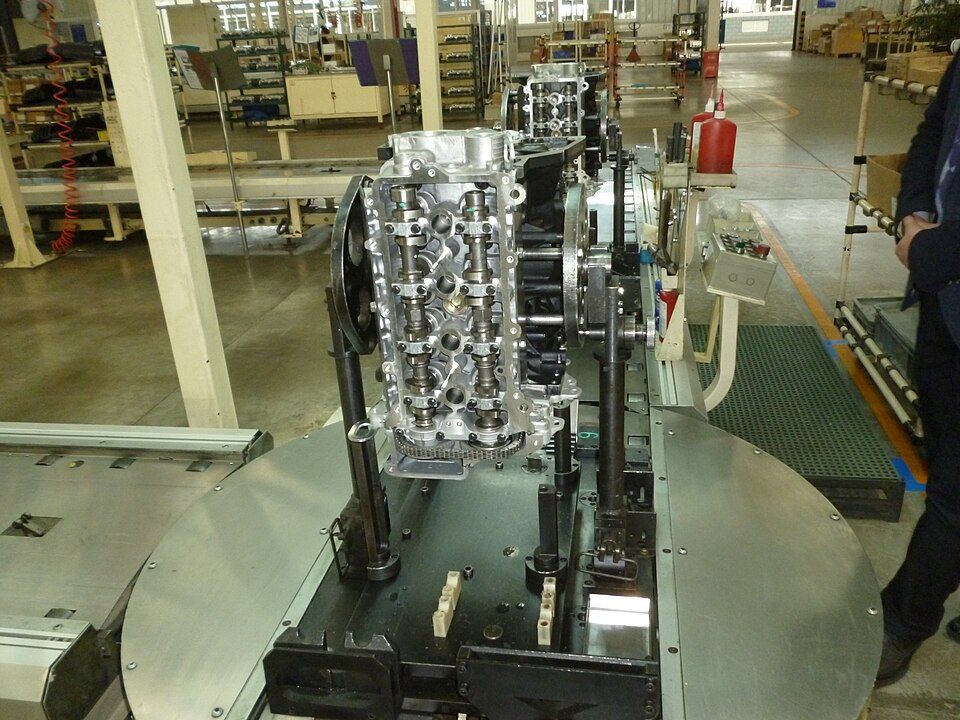
Walk onto any assembly floor, and you'll see a steady stream of engine blocks gliding along conveyor tracks from one workstation to the next.
At the start of the line, workers lock the bare cast-iron or aluminum block onto a heavy steel pallet. It rolls smoothly along the track, keeping the block steady so tools hit their mark at every single station without wobble.
Work begins down in the bottom end. Mechanics set the crankshaft into its journal bearings, bolt down the main bearing caps, and slide piston assemblies straight into the cylinder bores. Powered rotating stands spin the engine upside down so technicians can install the oil pump, oil pan, and bottom seals without straining their backs.
When the bottom end is complete, the stand turns the block right-side up, and the engine moves to the head station. Workers lay down the head gasket and position the cylinder head. Tightening cylinder head bolts requires extreme balance. Rather than turning one bolt at a time with a manual wrench, electric multi-spindle tools torque every head bolt simultaneously. That applies even clamping force across the block, protecting the gasket from leaks.
Once the head is locked down, hydraulic presses fit the oil seals, valve guides, and plugs. Servo controls keep the pressing force steady, sliding parts straight in without scratching the metal.
Essential Equipment Found on the Factory Floor
Automotive plants rely on several specialized categories of machinery during assembly depending on the engine design and production volume.
Engine Block Fixtures and Rotating Assembly Stands
Bare engine blocks travel down conveyor lines mounted on heavy steel pallets. Because workers need clear access to the top, bottom, and sides of the engine, stations use powered rotating stands. With the press of a button, these stands tilt or flip the engine block upside down when installing crankshaft main caps, then turn it upright for piston and valve head installation.
Multi-Spindle Torque Tools and Smart Nutrunners
Bolts hold the entire engine assembly together under severe heat and vibration. Critical joints like cylinder heads, connecting rods, and flywheels require exact torque-angle tightening. Factories use multi-spindle electric nutrunners that tighten multiple bolts simultaneously. These smart tools measure torque and angle in real time, saving digital records for quality tracking.
Automated Press-Fit Machinery
Parts like valve guides, crankshaft seals, piston pins, and core plugs require precise press fits. Hydraulic or servo-electric press machines drive parts into place with controlled force and stroke depth, preventing metal distortion or seal damage.
Inline Quality Control and Testing Methods
Factories never wait until an engine is mounted inside a vehicle to test its integrity. Inspections happen right on the line using two primary methods.
Air Leak Testing comes first. Before any oil or coolant goes into the engine, rubber plugs seal off every fluid port while a machine pumps in air. Sensors track internal pressure, and if it drops even a fraction, the machine flags a bad gasket or loose seal.
Cold Testing comes next. Here, a drive motor hooks right onto the crankshaft and cranks the engine cold. Sensors log oil pressure, compression, and timing while the engine turns. Any bad reading pulls the engine off the line immediately for teardown and inspection.
Comparing Manual Workstations and Automated Lines
Not all engine manufacturing follows the same blueprint. Factory automation depends on production volume and engine complexity.
Low-volume sports car brands stick with manual workstations, letting one master tech build an engine from start to finish. High-volume auto plants take a different route, using robotic bays to move heavy blocks, feed parts, and keep assembly times tight.
Summary
Ultimately, engine assembly machines keep modern vehicle manufacturing fast and defect-free. Powered rotating stands give workers clear access to every engine angle, multi-spindle electric tools apply uniform torque to prevent gasket damage, and inline leak tests catch seal defects before engines ever leave the line.


